+44 (0) 203 488 9897






Eyebrow Transplant Candidates & Suitability
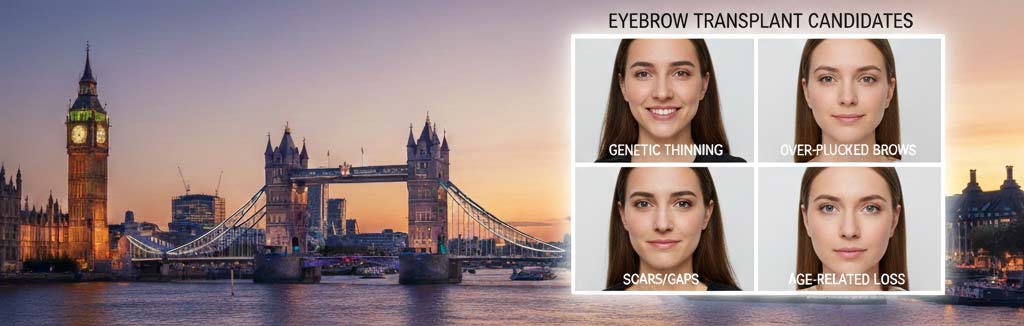
So you've been filling in your brows every single morning, pencilling in what nature forgot to provide, and you're wondering whether there's a more permanent solution. Eyebrow transplants have quietly become one of the most sought-after cosmetic procedures of the past decade, and for good reason. But before you book a consultation, it's worth understanding whether you're actually a good candidate — because this procedure isn't a one-size-fits-all fix, and the right surgeon will be the first to tell you that.
Who Makes an Ideal Candidate?
The most common candidates are people who have experienced hair loss in the brow area due to over-plucking or over-waxing over many years. If you grew up in the nineties, there's a decent chance you know exactly what we're talking about. Those ultra-thin arches that were so fashionable at the time can leave follicles permanently damaged, meaning the hair simply stops growing back no matter how long you wait. For these patients, an eyebrow transplant can genuinely be life-changing.
Beyond the over-plucking crowd, ideal candidates also include people who have naturally sparse or light brows, those who have experienced hair loss due to medical conditions like alopecia or thyroid disorders, individuals who have scarring from accidents or surgery, and people who have undergone chemotherapy. In all of these cases, the underlying cause of the hair loss matters enormously, because it affects how well the transplanted follicles will take and thrive.
Good overall health is essential. Candidates should be non-smokers or willing to quit temporarily, have realistic expectations, and be committed to the aftercare process. If any underlying medical conditions are contributing to hair loss — a thyroid imbalance, for example — these need to be properly managed before the procedure takes place, otherwise the newly transplanted hairs may be affected too.
The Consultation: Where the Art Begins
Here's where things get genuinely interesting. A great eyebrow transplant surgeon isn't just a technician — they're an artist, and the consultation is essentially where the canvas gets prepared. One of the most important parts of the process is the mapping stage, where the surgeon literally draws the shape of your future brows onto your face before a single follicle is moved.
Brow mapping is far more nuanced than it might sound. Using precise measurements and sometimes specialised tools, the surgeon maps out the ideal arch placement, tail length, and inner corner position based on your unique facial proportions. The golden ratio, facial symmetry, and your bone structure all come into play here. A skilled surgeon will also look at your natural brow hair direction and growth pattern, because transplanted hairs need to be placed at incredibly specific angles — sometimes as shallow as 10 to 15 degrees — to mimic the way real eyebrow hair grows. Get that angle wrong, and the result looks unnatural no matter how well the follicles survive.
The shaping conversation is deeply personal. Some people want bold, defined brows that frame their face strongly. Others prefer a softer, more feathered look. A good surgeon will guide you, offer their professional opinion on what suits your face, but ultimately respect your vision. Think of it like briefing a portrait painter — you bring the reference, they bring the expertise to make it work beautifully.
Who Might Not Be Suitable?
Not everyone is an automatic yes. People with active skin conditions like psoriasis or eczema in the brow area may need to wait until these are under control. Those with unrealistic expectations — wanting dramatically different brows than their facial structure can support — may benefit from further consultations before committing. And anyone with active alopecia areata, where the immune system is still attacking hair follicles, may find that transplanted hairs are equally vulnerable.
The Takeaway
Eyebrow transplants, when done well, are genuinely transformative. The key word there is well. Finding a surgeon who approaches brow design with both clinical precision and artistic sensitivity makes all the difference between results that look natural and results that simply look done. If they're spending real time on your brow map, asking questions about your lifestyle, and talking you through the shaping process like it genuinely matters — that's a very good sign you're in the right hands.
The suitability process follows the same clinical evaluation standards used for other surgical hair restoration procedures, which are listed on our main eyebrow transplant page.